Thursday, April 3, 2008

Animation-- How is it Done?


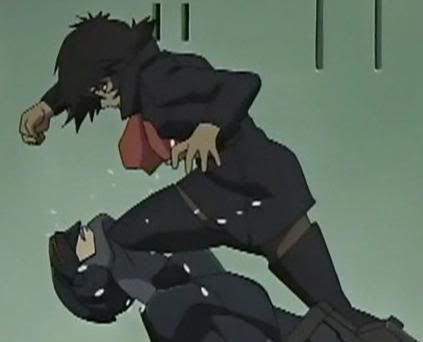
- Traditional animation, otherwise known as cell animation can be a very time consuming and somewhat tedious art form. The result can be very beautiful and full of life, but the viewer can easily not appreciate the vast amount of work, effort and time that is usually put into such projects (much like with other things.) With the numerous amounts of animated features as well as other media sometimes it’s taken as things only for young audiences when it can be for all.
- The animation in films/cartoons can contain thousands of frames, which are drawn by hand. They often start off as storyboards to plan the action of the feature. After the storyboard is agreed upon and finalized, all sounds/score/vocals to be used in the feature are created and recorded.
- Story reels are created in combination of the sounds and the finalized storyboard to further plan timing. If issues occur editing of the storyboard and or soundtrack can be done. Character model sheet are created next, to ensure consistency with animating of characters and props. With character designing in the works, landscapes and background designing is also worked on. The theme and scheme of colors are decided and determined before final backgrounds are created with decided media (such as paint or digital media.) After all planning is done, there’s still the animating that has to be done. The vast amount of planning helps avoid wasted time and money on hand drawn animation that could possibly not be used in the final film.


---
http://en.wikipedia.org/wiki/Traditional_animation

http://www.dreamagic.com/roger/04-22-96.html
http://www.blackwolf-images.com/page8.html
http://www.donbluth.com/cleanup.html

Thursday, March 6, 2008

Gesso?


- What is Gesso? Well, gesso is a primer, a preparatory coating applied to a material before painting. It protects both the surface and the paint making the paint stick better to a surface as well as making the surface sturdier.

- Gesso adds tooth to the surface which adds textures and to the adhesiveness of a surface. It was originally made with animal glue and other various ingredients, but now is (acrylic gesso) “a combination of calcium carbonate with acrylic polymer medium latex, a pigment and other chemicals…” (Wikipedia). Titanium white (or T. dioxide) is usually the pigment added to the gesso ingredients to create white gesso.

- Acrylic gesso is the modern version of gesso which is often used with both acrylic and oils. In general, it’s not as dense as paint, but creates a thick surface. It help keeps moisture from soaking and weakening the surface. It’s not a requirement in painting and other things that gesso can be useful with, but the extra strength it gives surfaces as well as the added texture and absorbency can be a rewarding enough reason for consideration of applying it.


-
http://www.aisling.net/journaling/gesso.htm
http://en.wikipedia.org/wiki/Gesso
http://en.wikipedia.org/wiki/Primer_%28paint%29
- -
http://members.cox.net/kellyshults/images/WC-B.jpg
http://emptyeasel.com/wp-content/uploads/2007/06/liquidgesso.jpg
--

Tuesday, February 26, 2008

Eaten Color Lately?


- Have you ever wondered about that perfectly orange orange, or that perky pink frosting, or that cool refreshing blue-green beverage? Well, it's all generally washed over in food coloring. People have come to expect certain foods to be that certain "natural" color. Food can be identified by their signature color(s). Sometimes the color of a food can even signify the state of the food; such as it's freshness, whether it was cooked to long or not enough, or even whether its edible.


- There are two types of food coloring. They are known as dyes and lakes, which are both color additives. Color additives are basically anything that can apply color to things. Dyes dissolve in water and aren't soluble in oil. Lakes are also not soluble in oil, but are dispersive with oil. Lakes contain dye and insoluble substance.


- So why is food dyed exactly, again? If people want foods to have its natural color, the legitimacy of the food's color contradicts our fondness of "natural" color...

Reasons for dying can include: reducing color loss, reducing variation in color, enhancement of natural color and giving food a signature look. The consumer tends to associate flavors with color as well. In conclusion, the color of foods can determine its appeal, identity and its company's success. Ideals play a huge role in the use of food coloring.


http://www.cfsan.fda.gov/~lrd/colorfac.html
http://en.wikipedia.org/wiki/Food_coloring


http://www.atlantaparent.com/07-04-Apr2007/apr07-art3-easter.html
http://www.oregonchocolatefountains.com/images/lemon-chocolate.jpg
http://www.dairy.com.au/consumers/images/dairyaustralia/ddf-adp-butter-home-1.jpg

Wednesday, February 13, 2008

Of All Colors... Blue?


- Why is the sky blue? Before discussing the sky being blue, let’s see what the sky really is. The sky is the part of the atmosphere that is seen from the surface of astronomical objects. What is air? If you’re thinking oxygen, you aren't completely right. Air is actually a mix of gases or the atmosphere. In Earth's case the air is mainly a mix of the gases of nitrogen and oxygen.
- So why is a part of the atmosphere blue? The molecules of the air molecules scatter the short wave-length (blue light) from the sun more than they scatter the other wavelengths in the light.
- At sunset or sunrise, the color changes to warmer colors because the blue light has been scattered away from the line of sight of the sun's direction leaving a gradient of red light. Clouds appear white, because their particles are thicker than the wave-lengths of light and scatter all colors evenly.


-
http://en.wikipedia.org/wiki/Sky
http://math.ucr.edu/home/baez/physics/General/BlueSky/blue_sky.html
http://en.wikipedia.org/wiki/Diffuse_sky_radiation
http://en.wikipedia.org/wiki/Air

Northern Lights- Colors of the Sky


- The natural light show known as Aurora Borealis (in the northern latitudes) is an amazing phenomenon. The colored lights gracefully dance through the atmosphere in the form of a curtain or diffused glow. The Aurora Borealis, as its nickname intends, can only be seen in the northern hemisphere sky.
- First of all, what are the northern lights? Well it's the form of polar lights (auroras) which is unique to certain places. They are most notable the North (Aurora Borealis) and the South (Aurora Australis.) It is the result of charged particles that have collided from both the magnetosphere and the Earth's upper atmosphere. Many of the particles arrive from a solar wind from the sun. When the collision happens the energy becomes "excited" and gradually dissipates. For example the color of the aurora depends on the molecules participating. The greens and reds in the aurora could be dealt from atomic oxygen, while blue/violet and a weak red emission could come from nitrogen ions and molecules.
- Another notable fact could be how the auroras aren't unique to Earth, they happen on other planets as well; such as planets with stronger magnetic fields, Jupiter and Saturn. Though, they aren't always seen they always exist on some plane of the planet. Most of the time they are extremely faint and many obstructions (such as other lights and clouds) make it impossible to see. A clear, night sky is the best environment for seeing any aurora. Aurora opportunities can be very rare in some places, but common in others.

-
http://odin.gi.alaska.edu/FAQ/#what
http://en.wikipedia.org/wiki/Aurora_%28astronomy%29

Friday, January 25, 2008

Color Meaning


-Colors can have different implications in various situations. For a business, the color red could be intended for grabbing attention or give it a unique identity from its competitors. In general society it could be used to warn of potential danger or to emphasize an instruction. In nature it could also suggest danger, such as fire or blood (in general). Certain foods in nature are red and also some living things.
-The red used on stop signs is meant to be eye catching and not blend in with it’s surroundings. The general theme in traffic laws with color flows together, with red symbolizing denied motion or access.
-The red used in the retail industry can be used to invoke a “come and consume” feeling and for the general face of a company and it’s advertizing.

Thursday, November 8, 2007

Conceptual Puzzle

- The class did an activity that required a group effort of drawing individual lines and placing them in a specified order to create a bigger picture. The picture was that of abstract lines that flowed throughout most of the composition, but certain sections of lines stood out, because of their placement on the papers. The lines tend to go from one corner to another corner, but some didn't follow the same procedure.

- During the process, it was a little confusing at first, because of the way the papers with lines had to be arranged as well as the order of how things were suppose to go.
This project reminded me of the activity where people take a smaller picture and enlarge it by drawing sections of the picture on many sheets of paper. Then, they piece them together as if it were a huge puzzle. The result would be a huge composition that was arranged with many individual drawings.

-The result of the conceptual activity was interesting, because of the general flow of the composition.

Thursday, November 1, 2007

Performances of the Class

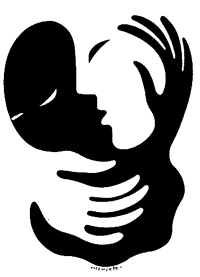
The performances made by my classmates were pretty interesting. One of my favorites was the performance that involved two people mirroring each other's hand movements while keeping them close at the same time. It was cool how the gestures and positioning of the people matched that of reflections in a mirror. The smooth motions required by the performers had a graceful look to it that made it interesting to view as part of the audience. It was also intriguing how everyone's proposals went in various directions. They ranged from a game of catch, to the mirroring of hand gestures, to actual collaboration drawing of various shapes. Overall, participating and viewing the performance activities was a fun and pleasant experience.

Monday, October 29, 2007

The Gutai Group

The Gutai was a Japanese artistic movement founded in the 50’s. The word translates to embodiment or concrete. “In their early public exhibitions in 1955 and 1956 Gutai artists created a series of striking works anticipating later Happenings and Performance and Conceptual art.” The art of the Gutai was created to give life to the material instead of changing it or falsifying it. Their work included events such as: rolling through mud, running through a paper screen, painting with feet, throwing glass jars filled with paint into a canvas, and more.


(10/29/07)
http://www.tate.org.uk/collections/glossary/definition.jsp?entryId=130
http://www.ashiya-web.or.jp/museum/10us/103education/nyumon_us/manifest_us.htm
http://nezumi.dumousseau.free.fr/japon/j2/japarmurakami2.jpg

Thursday, October 25, 2007

Faces and Mirrors

Today's activity of using mirrors to imitate each other's expressions and walking as far as you can while still trying to imitate facial expressions was sort of interesting.
The activity was kind of strange, but also humorous and a little fun. It was insane how the activity can actually go on for a long period of time with enough space. I expected the activity to take a while, although it was a short and quick performance. I think that the activity could be more interesting with maybe bigger mirrors and instead of only facial imitations gestures and motion was copied from each other. Also, being the viewer of the activity instead of the performer might be more fun as well.

Wednesday, October 17, 2007

Logos?


Logos are generally used to simplistically represent business entities such as corporations, product lines, stores, organizations, various proprietorships, and etc. They tend either to involve both a symbol/shape/design as well as unique font or just unique font. There are logos that have several sets, which can consist of one with only font, one with only the design and/or one with all of the above. Logos are designed to stand as the image of company’s products or services in the form of planned typeface and/or intriguing shape(s) (sometimes even line).


http://www.gameonly.pl/partners/playstation.jpg

http://www.minidisc.org/images/walkman_logo_2000.jpg

10/16/07

Wednesday, October 10, 2007

Comment on "Bride"

The work of Duchamp, "The Bride" is very interesting in its own way. At first glance, it just appears as weird and random shapes that all differ from each other in many ways. One panel of glass appears very spacious, because of the abundance of negative space. The opposing glass appears very crowded and in turn acts as an opposing reflection of the first glass and vice versa. Some parts appear machine like, but there are also shapes in the composition seem more organic or out of place. After, seeing a digital animated version (a manifestation created from Duchamp's notes), the art appears as a giant flowing machine that is similar to the union of woman & man and reproduction. The machine ingenuously flows smoothly as one and perhaps reveals the artist’s genius intentions and the massive amount of depth he put into his work.

Wednesday, October 3, 2007

Patterns, All Around

Patterns are basically everywhere, in many forms, for many purposes. For design purposes, it is very plentiful in a vast amount of things. Generally, most designs of floors, walls, and fabric are dominated by pattern designs. All of the patterns differ in their own ways, while others become similar. Some are more complex, some are very simplistic; some are eye-catching, can hurt eyes. These designs may vary from substance to substance, but the patterns used in Islamic art are all designs of a different category. They seem to blend shapes into shapes, patterns into patterns, and lines into both patterns and shape so flawlessly. These designs display great intricacy and precision; and at times are spread over great distances of structures and other items. Patterns may frequently stress eyes, if they aren't simple, but each design can be significant in it's own right if fitted for the best purpose.

Monday, September 24, 2007

Gestalt?


-
-
Gestalt can be:
-Described as shape, form, guise or likeness.
-
-Described as a figure or as a synonym for person.
-
Or,
- Decribed as a collection of physical, biological, psychological or symbolic entities that creates a unified concept, configuration or pattern which is greater than the sum of its parts.
-

Friday, September 14, 2007

Value Study

- A typical art project such as the creating value scales can easily become a tedious activity, especially when executed numerous times. However, when extra conditions are placed, such an activity can become more interesting and at times maybe even delightful.
- Creating a value scale, while at the same time manipulating it into a design and in a more original and less containing shape brought life into an otherwise bland exercise. The process of setting flat values in various shapes that all had to contribute to the overall composition paired nicely with the fluid sketching of the design. Designing compositions out of simple concepts can be so refreshing and rewarding.

Thursday, September 6, 2007

Strings and Things

Creating webs with string that become manipulated from other strings can be a pretty interesting activity. The finalized look of the giant web integrated around the studio was really connected and wound in a creative and beautiful way. It was nice for a change to do such activities that can turn into a group effort. The only thing that wasn't as great about the activity was the clean up, obviously... One thing I would do differently on this kind of project is use less string the next time, the clean up would of been so much easier.

Line... or is it Shape?


1) Which of the images a, b, c, or d are line?
--Mostly A, and B. Though in a way all can be lines, C that seems like a shape can be interpreted as really short and thick line.
-
2) Which of the images a, b, c, or d are shapes?
--Again, all can be examples of shape as well as line. A and B may seem more like lines, but the first can be seen as a triangle, and B can be a more swirled creative shape.
-
3) What makes a line?
--What makes a line can be the way it is formed to seem infinite, or finite, but doesn't connect to it.
-
4) What makes a shape?
--The deference between shapes and lines can be the way shape is whole or is what line can create when lines connect.

Thursday, August 30, 2007

Crit# 1


- In this piece, there are a lot of free flowing lines. Among the falling, fluid lines there are seemingly chaotic marks that almost resemble ink splatters. The layering found about the “splatter” marks appear as random spots, dark misting areas and nearly unnoticeable, washed out, short lines. Around the lighter areas of the art reveal sturdy, geometric lines that are on the other hand softer than both the striking, fluid lines and the noticeable dark splatters. Certain flowing lines stand out, because of their orange/brown color, which opposes the overall grayscale theme.

- The work can bring up the feeling that spontaneous efforts overshadow predicted order. Also, the lines that lead through the splatters could represent thriving beings/groups/etc. that experiences its own spontaneous events that sometimes can result to utter destruction.

- Overall, the work seems to be a successful design, which at first might seem unfocused in meaning, but can suggest the audience to create their own interpretations and meaning for it. The lines lead the eye around most of the composition, and at the same time, it takes you back to the darkest splatters dead center of the image.